

Why Skipping Breakfast May Worsen PCOS Cravings and Energy Crashes
Updated: Jul 31

Many women with PCOS skip breakfast for what feel like sensible reasons.
You may:
not feel hungry in the morning
rely on coffee to get going
feel too busy to eat
want to “save calories” for later
or believe fasting will help with weight loss
Sometimes breakfast gets pushed later and later until the first proper meal happens at lunchtime, or even later in the afternoon. Looking for some great breakfast ideas, there are 15 high-protein ideas in this post.
While this pattern may seem harmless, many women notice it often leads to:
stronger cravings later in the day
afternoon energy crashes
feeling constantly hungry at night
emotional eating, learn more about PCOS Emotional Eating and Why Stress, Exhaustion and Restriction Can Make Food Feel Harder to Control.
overeating in the evening
or feeling stuck in an exhausting food rollercoaster
This does not mean everyone with PCOS must eat a large breakfast immediately after waking.
But for many women:
how the day starts strongly influences how the rest of the day feels.
The Blood Sugar Rollercoaster Pattern
One of the most common patterns I see in women with PCOS looks something like this:
coffee instead of breakfast
long gaps without eating
cravings for quick sugar or caffeine
afternoon fatigue
intense hunger in the evening
overeating or snacking at night
then guilt and frustration afterwards
This often creates:
a blood sugar rollercoaster pattern.
When meals are delayed for long periods, many women eventually feel:
physically exhausted
mentally foggy
emotionally drained
and much hungrier later in the day.
This is one reason evening cravings can feel so difficult to control through willpower alone.
Why Blood Sugar Stability Matters in PCOS
PCOS is commonly associated with changes in insulin sensitivity and blood sugar regulation. This is explained in detail in my Weight & Blood Sugar Guide.
This does not mean everyone with PCOS experiences the same symptoms.
But many women notice:
fluctuating energy
strong cravings
feeling hungry soon after eating
or difficulty feeling satisfied after meals.
Balanced meals eaten consistently through the day may help support:
steadier energy
appetite regulation
and fewer extreme hunger swings.
Breakfast is often one of the first opportunities to support this.
Why Skipping Breakfast Can Increase Evening Cravings
Many women believe skipping breakfast helps them “eat less”.
But in reality, delayed eating can sometimes increase:
hunger intensity later in the day
cravings for quick energy foods
emotional eating
and loss of control around food at night.
This is partly because the body is trying to:
catch up on missed energy.
By evening, many women feel:
exhausted
under-fuelled
stressed
and ravenously hungry.
At that point, cravings are often far stronger than they would have been earlier in the day.
This is why:
evening eating patterns are often shaped by what happened earlier, not just lack of discipline at night.
Cortisol, Stress and Morning Eating
Stress hormones also play a role.
After waking, cortisol naturally rises as part of the body’s normal rhythm to help us feel alert and awake. Discover more about How Stress Affects Hormones and PCOS and Why Symptoms Often Feel Worse During Stressful Periods.
For some women, especially those under high stress or sleeping poorly, relying only on:
caffeine
fasting
and long gaps without food
may leave them feeling:
jittery
anxious
wired but exhausted
or prone to bigger energy crashes later.
This does not mean everyone must eat immediately after opening their eyes.
But many women with PCOS feel noticeably better when they:
eat earlier
include protein
and avoid staying on an empty stomach for most of the morning.
Why Protein at Breakfast Matters
Breakfast composition matters just as much as timing.
A breakfast based mainly on:
sugary cereal
pastries
toast alone
or sweet snacks
may still lead to:
energy crashes
hunger
and cravings later on.
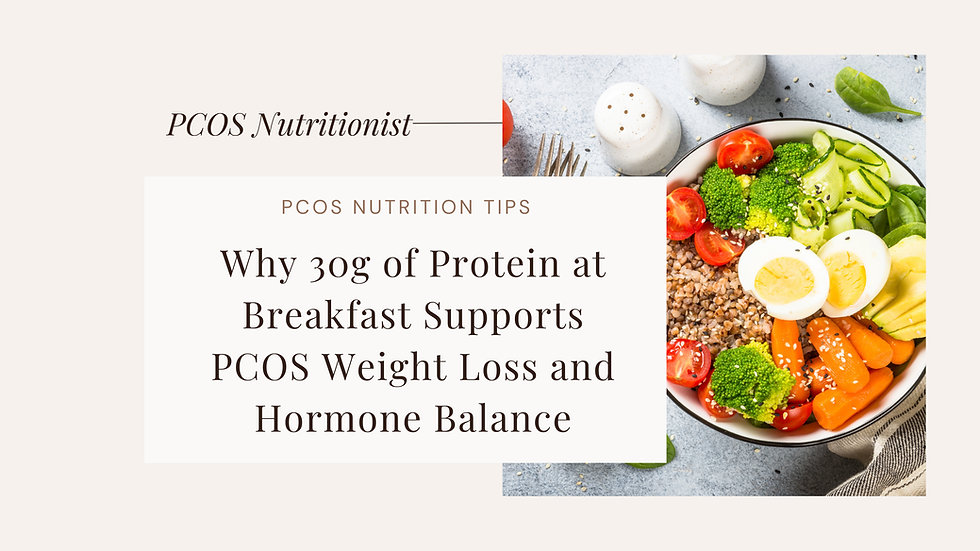
This is why I often encourage women with PCOS to focus on protein-rich balanced breakfasts. Here are some great 30g high-protein meal ideas for breakfast, lunch and dinner.
Protein may help support:
fullness
steadier energy
appetite regulation
and reduced snacking later in the day.
Examples may include:
eggs with sourdough and avocado
Greek yoghurt with berries and seeds
protein oats
cottage cheese on toast
tofu scramble
overnight oats with protein-rich toppings
or a balanced smoothie with protein included
The goal is not perfection.
It is creating a steadier start to the day.
“How You Start the Day Is How You End the Day”
One of the biggest shifts many women notice is that:
starting the day more balanced often changes the entire evening.
When breakfast and lunch are:
more balanced
more consistent
and more filling
many women report:
fewer evening cravings
steadier mood and energy
less emotional eating
and feeling calmer around food overall.
This is why PCOS support is rarely about:
eating perfectly
cutting out foods
or using more restriction.
Often, it is about reducing the physiological chaos that drives cravings in the first place.
What If You Exercise in the Morning?
Some women genuinely do not want a large meal first thing, especially before exercise.
That is completely different from:
unintentionally under-eating all morning.
In these situations, a smaller balanced option before movement may feel more supportive, such as:
Greek yoghurt
a boiled egg and fruit
a small protein smoothie
a couple of oatcakes with nut butter.
The aim is simply to avoid:
starting the day on a blood sugar rollercoaster.
What If You’re Not Hungry in the Morning?
Loss of morning appetite is very common.
This may sometimes be linked to:
eating heavily late at night
stress
disrupted appetite signals
or years of irregular eating patterns.
Rather than forcing a huge breakfast, it can help to:
start smaller
eat consistently
and build routines gradually.
For many women, appetite regulation improves over time once eating patterns become more stable.
Why Restrictive Dieting Often Makes This Worse
Many women with PCOS have spent years trying:
low-calorie diets
fasting approaches
meal skipping
While these approaches may initially feel “controlled”, they often increase:
cravings
food focus
evening hunger
and inconsistent eating patterns over time.
This is why supportive nutrition is often less about:
more restriction
and more about:
more consistency.
A More Realistic Approach to Breakfast With PCOS
There is no single “perfect” breakfast. This post explains Why Skipping Breakfast May Worsen PCOS Cravings and Energy Crashes.
Many women feel more stable when they:
eat within a reasonable time after waking
include protein and fibre
avoid relying solely on caffeine
and reduce long gaps without food.
Small consistent changes usually work better than extremes.
Because ultimately:
the goal is not eating perfectly.
It is creating steadier energy, appetite and eating patterns across the whole day.
Free 10-Day PCOS Evening Cravings Reset

If you struggle with:
evening cravings
energy crashes
emotional eating
skipping meals
or feeling stuck in all-or-nothing eating patterns
you may find my free guided reset helpful.
The 10-Day PCOS Evening Cravings Reset focuses on:
supporting steadier blood sugar and energy
reducing evening cravings
building balanced meals realistically
improving consistency without restriction
helping women feel calmer and more confident around food
You’ll also join a small supportive WhatsApp group with like-minded women with PCOS working through the reset together.
Join the priority here:
Related PCOS Articles
You may also find these helpful:
DISCLAIMER: The content on this webpage is not intended to be a substitute for professional medical advice, diagnosis, or treatment. Always seek the advice of your doctor or qualified healthcare provider. Never disregard professional medical advice or delay in seeking it because of something you have read on my website.

Comments